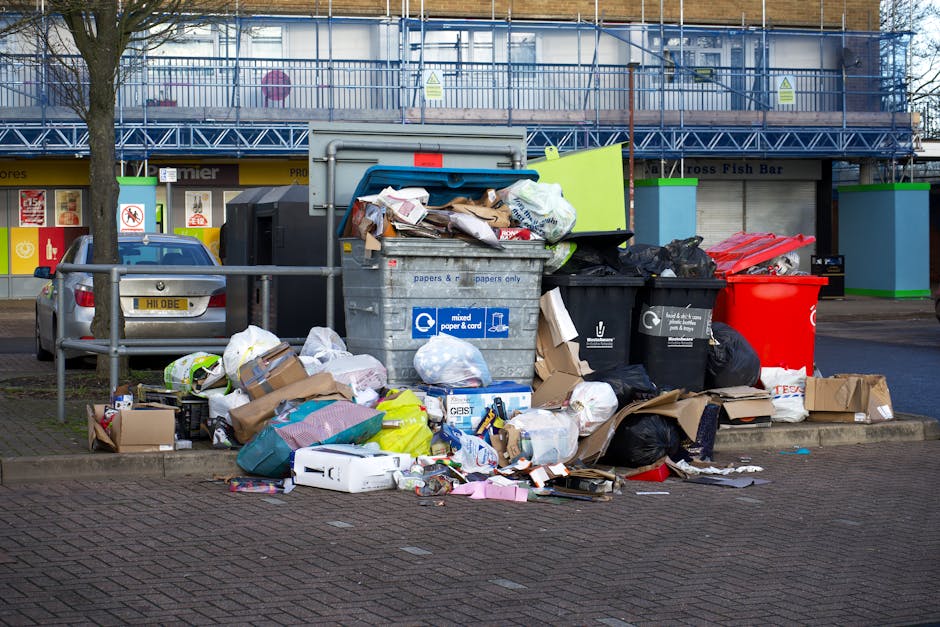
Westferry Road skip alternative rubbish collection Limehouse: a practical guide for tight access, busy streets, and fast clearances
If you are trying to sort out waste on or near Westferry Road, you already know the awkward bit: it is not always a simple "order a skip and forget it" job. Parking can be tight, access can be fiddly, and sometimes you only need the rubbish gone without leaving a metal box outside for days. That is where Westferry Road skip alternative rubbish collection Limehouse comes in.
This guide explains the main alternatives to traditional skip hire, how they work in real life, where they make sense, and what to watch out for. Whether you are clearing a flat, managing a small renovation, or dealing with office or building waste, the aim here is simple: help you choose the least stressful option. Truth be told, the best waste solution is usually the one that fits the street, the load, and your timetable - not just the one with the biggest container.
Why Westferry Road skip alternative rubbish collection Limehouse matters
Westferry Road is the kind of place where logistics matter almost as much as the waste itself. You may be dealing with narrow kerb space, mixed traffic, nearby homes, and limited room to stage materials. In that environment, a classic skip can be a poor fit. Not always, but often enough.
A skip alternative rubbish collection service is usually designed to remove waste more directly. Instead of dropping a container and waiting, the team comes to load, collect, or clear the rubbish in a way that suits the site. That can reduce disruption, help you work around access issues, and keep the pavement or roadway clearer. For some jobs, that is a huge relief. You can almost hear the difference: less clanging metal, fewer awkward manoeuvres, less faffing about.
It also matters because the wrong waste method can create extra costs. If you choose a skip but need a permit, or if the street simply cannot accommodate it well, the job can become more expensive and more stressful. A better-matched collection method can save time and avoid those "we should have done this differently" moments.
Expert summary: In Limehouse, the smartest waste solution is often the one that keeps access simple, loading efficient, and disruption low. For many Westferry Road projects, that means comparing skip hire with direct collection, wait-and-load, or grab-based removal before booking anything.
If you are comparing waste options more broadly, it can help to look at the wider skip hire and rubbish removal choices side by side rather than assuming one route fits everything.
How Westferry Road skip alternative rubbish collection Limehouse works
At its simplest, skip alternative collection means the waste does not sit on the street for days. It is removed by a team that either loads it for you, arrives with a grab vehicle, or offers a same-day clear-out where suitable. The exact method depends on the material, volume, and access conditions.
There are a few common models:
- Man and van collection: Best for mixed household rubbish, lighter clearances, and smaller one-off loads.
- Wait and load: A vehicle arrives, you load quickly, and it leaves without leaving a container behind.
- Grab lorry collection: Useful for heavier or bulkier waste where a mechanical grab arm can reach the pile.
- Specialist clearances: Good for offices, garages, lofts, garden waste, builders' debris, and larger property clear-outs.
In practice, the workflow is usually straightforward. You describe the waste, share photos if asked, agree the collection type, and set a time window. On the day, the team assesses access, loads the waste, and takes it away for sorting and disposal. If you are used to skip hire, it feels a bit more direct. Less waiting around. Less guessing.
For heavier building jobs, the collection can sometimes be paired with builders waste removal or construction waste disposal. For domestic jobs, services such as domestic skip hire, house clearance, or garage and loft clearance may also be relevant depending on what you are clearing.
One practical point: if your waste can be loaded only during a narrow parking window, a fast collection method often beats a static skip. That is especially true when access is shared or there is nowhere sensible to keep the container.
Key benefits and practical advantages
The biggest advantage is simple: you match the service to the street, not the other way around. But there is more to it than that.
- Less roadside disruption: No skip sitting in place for days, which is useful where kerbside space is precious.
- Better for awkward access: Narrow entrances, basement clearances, or awkward turning space can make direct collection easier.
- Speed: Some collections can be arranged very quickly, especially when the waste is ready to go.
- Flexibility: Different waste types can be handled separately, which helps when a single skip would be too blunt an instrument.
- Cleaner site management: The waste is removed in one go, so your frontage or courtyard does not become a staging area.
There is also a quieter benefit: peace of mind. If you live on Westferry Road, or manage work there, you probably do not want residents, neighbours, or building managers dealing with an eyesore for a week. A collected load feels tidier. It just does.
Another practical upside is that alternative rubbish collection can be easier to scale. A couple of bulky items? Fine. A full flat clearance? Also fine, if the provider recommends the right method. A messy builder's job? Use a service built for it, not a generic approach that leaves everyone improvising.
If you need to compare container sizes and typical use cases, the guide on skip sizes and prices is useful background, even if you decide a traditional skip is not the right route.
Who this is for and when it makes sense
This kind of service is not just for one type of customer. It suits anyone who needs waste removed efficiently without the drawbacks of a skip sitting outside.
Typical users include:
- Flat owners and tenants clearing bulky household rubbish, old furniture, or post-move clutter.
- Landlords and letting agents dealing with end-of-tenancy clearances.
- Builders and tradespeople working on small to medium refurbishment jobs.
- Offices and commercial units needing fast removal of office furniture, packaging, or confidential waste.
- Homeowners tackling loft, garage, garden, or general property clear-outs.
It makes sense when:
- there is no safe or practical place for a skip;
- the waste is ready in a pile and can be loaded quickly;
- you need same-day or next-day removal;
- you do not want to apply for a permit;
- the project is short, messy, and time-sensitive.
It is less suitable when you are producing waste over many days and need an ongoing on-site container. In those cases, a normal skip - perhaps even an enclosed and lockable skip hire option - may be the better call. There is no prize for forcing the wrong method just because it sounded convenient at first.
Commercial users should also consider whether commercial skip hire or office clearance is the cleaner fit for the job. Sometimes the real win is choosing the less glamorous option that actually saves time.
Step-by-step guidance
If you want to avoid delays, the process works best when you treat it like a short project rather than a one-off phone call. Here is a practical route that usually works well.
- Identify the waste type. Is it mixed household rubbish, building rubble, green waste, appliances, furniture, or something more specialist?
- Estimate the volume. A few bags, a small van load, or something closer to a large clearance? Being roughly honest here helps more than perfect precision.
- Check access. Think about vehicle width, parking restrictions, doorways, stairs, and whether waste can be staged safely.
- Decide how fast it needs to go. Some jobs can wait a day or two; others need prompt turnaround.
- Ask whether a permit would be needed for a skip. If yes, compare that admin burden with a direct collection option.
- Separate anything prohibited or specialist. Hazardous items need proper handling, not guesswork.
- Book the most practical method. Choose the option that fits the site and the waste, not just the headline price.
- Prepare the waste before the crew arrives. Keep it accessible, dry where possible, and easy to load.
A tiny bit of preparation goes a long way. If you have ever watched a crew move around a blocked hallway or a cramped loading bay, you will know why. The difference between "easy job" and "why is this taking so long?" can be one afternoon's sorting.
If you are still deciding between direct removal and a more traditional route, compare the details with wait and load skip hire and man and van services. Those are often the nearest practical alternatives.
Expert tips for better results
Small choices make a surprisingly big difference. In our experience, the smoothest collections are the ones where the customer has already thought through the awkward bits.
- Take photos before booking. A few clear pictures of the waste and access route help more than a long explanation.
- Keep the load together. Mixed waste is fine in many cases, but scattered piles slow things down.
- Move vehicles if needed. If you can clear a spot near the entrance, do it. Seriously, it saves hassle.
- Label anything that must stay. That half-open box of "maybe useful later" items has a habit of disappearing into the wrong pile.
- Ask about recycling routes. A good provider should explain how the waste will be sorted or diverted.
- Choose the right timing. Early-day collections can be easier on busy streets and cleaner for building schedules.
If you are dealing with bulky household items, specialist services like mattress and sofa disposal or fridge and appliance removal can be more efficient than trying to fit everything into one catch-all collection.
And if the job is sensitive - maybe it involves papers, archive files, or old records - then pairing clearance with confidential shredding can keep the process neat and secure. Not glamorous, granted. But very useful.
Common mistakes to avoid
Most waste jobs go wrong in the same few ways. Nothing dramatic. Just avoidable things that add time, cost, or tension.
- Underestimating the volume. A "small pile" can become a van-load very quickly once broken down.
- Forgetting restricted items. Some materials need separate treatment and may not be accepted with general rubbish.
- Ignoring access issues. A service can only be efficient if the vehicle can reach the site or the load can be carried safely.
- Mixing everything together without thinking. It is usually better to separate reusable, recyclable, and specialist items where practical.
- Leaving booking until the last minute. Last-minute jobs can be handled, but not every job needs that level of drama.
One common trap is assuming all waste collections are interchangeable. They are not. A builder's clear-out, a tenant leave-behind, and a garden tidy-up all behave differently. So does a half-finished flat refurbishment with rubble, plasterboard, and old fixtures mixed in. If you choose the wrong service, you may still get the waste removed - but you will probably pay in time or inconvenience.
For construction-heavy projects, it is worth looking at construction waste clearance or demolition waste removal rather than a generic collection. The more specific the job, the cleaner the outcome tends to be.
Tools, resources and recommendations
You do not need a complicated toolkit to make the process work, but a few simple resources help a lot.
- Phone camera: Take pictures of the waste, the access point, and any parking restrictions.
- Rough volume guide: Think in bags, boxes, furniture items, or van loads rather than trying to be overly technical.
- Project list: Note what is going, what is staying, and what might need special handling.
- Site measurements: A quick check of gate widths or stair turns can prevent awkward surprises.
- Scheduling notes: Match collection time with building access, neighbours, or loading restrictions.
Useful supporting pages on the site include what can go in a skip, recycling and sustainability, and pricing and quotes. Even if you are leaning away from a skip, those pages help you understand what the operator can accept and how waste is usually handled.
If speed is the priority, same day skip hire can be a useful benchmark for comparison. Sometimes you end up choosing the quicker collection option instead, which is perfectly sensible. No need to make it a loyalty test.
Law, compliance, standards, or best practice
Waste collection in the UK is not something to be casual about. You do not need to become a compliance expert, but you should expect proper handling, traceability where relevant, and safe disposal practices.
As a rule of thumb, a legitimate waste contractor should be able to explain:
- how the waste will be loaded and transported safely;
- what happens to recyclable or reusable materials;
- how specialist items are treated;
- what items are not accepted;
- any permit implications if a skip is used instead of direct collection.
For hazardous or unusual materials, caution matters more than convenience. If you are unsure whether something counts as hazardous, do not guess. Use a service that specifically covers hazardous waste disposal or ask for clear guidance before the job starts.
Best practice also means protecting people and property. On a busy road like Westferry Road, that includes safe loading, sensible vehicle positioning, and keeping walkways clear. For some projects, especially where lock-up and security matter, an enclosed and lockable skip hire option can be more appropriate than open access. Different job, different risk profile.
If a permit would be needed for street placement, compare that with the simpler direct-collection routes. The relevant pages are skip hire permits and skip permits. Those pages are useful even when you are trying to avoid the permit route altogether. Knowing the admin burden helps you make a better choice.
Options, methods, or comparison table
Here is a straightforward comparison of the most common approaches for waste removal around Westferry Road and Limehouse.
| Option | Best for | Main advantage | Possible drawback |
|---|---|---|---|
| Traditional skip hire | Longer jobs, ongoing waste, major refurbishments | Large capacity and flexible loading over time | May need space, time, and possibly a permit |
| Wait and load | Quick clearances where access is tight | No container left on the street | Requires the waste to be ready quickly |
| Man and van | Smaller household, office, or mixed rubbish loads | Flexible and convenient for one-off jobs | Less ideal for very heavy or very bulky debris |
| Grab lorry | Bulk waste, heavier loads, awkward access | Mechanical loading can be efficient | Needs a suitable place for the vehicle and grab arm |
| Specialist clearance | House clearances, office moves, gardens, appliances | Tailored to the waste type | May not suit general builder-style rubble |
If your job is more site-based than domestic, a site clearance or builders skip hire approach may be more appropriate than pure rubbish removal. The key is to match the method to the material and the pace of the project.
One thing people often miss: the cheapest-looking option is not always the cheapest outcome. If a collection method saves you a permit, two days of disruption, and a parking headache, that matters. Quite a lot, actually.
Case study or real-world example
Imagine a small refurbishment in a Limehouse apartment close to Westferry Road. The team is replacing a bathroom, removing old packaging, and clearing a few bulky bits from a hallway cupboard. A skip would technically work, but only if there were a safe place to put it - and that would mean juggling parking, access, and probably a permit conversation.
Instead, the contractor prepares the waste in one corner of the flat and books a direct collection. The crew arrives, loads everything in a short window, and the frontage stays clear. No bin-space war. No container sitting outside while the work continues. The job is done before lunch, and everyone gets on with their day.
Now compare that with a bigger example: a ground-floor commercial unit clearing old office furniture, boxes, and a few bulky fixtures. Here, a combined approach might be better - a direct collection for the lighter material, then a specialist option for heavier or more structured waste. That is where services like commercial skip hire and office clearance become part of the decision rather than afterthoughts.
These jobs sound similar on paper, but in the real world they are not. One is mostly about convenience. The other is about managing volume, timing, and compliance with less stress.
Practical checklist
Before you book, run through this quick checklist. It saves a surprising amount of back-and-forth.
- Have you identified the main waste type?
- Do you know roughly how much needs to go?
- Is the waste ready in one place?
- Have you checked for bulky, electrical, or specialist items?
- Is access easy enough for a collection vehicle or loading crew?
- Would a skip need a permit or create road disruption?
- Do you need same-day or next-day removal?
- Have you separated anything valuable, confidential, or reusable?
- Do you know whether recycling is part of the service?
- Have you compared the options with a direct collection, skip, or grab solution?
If you are looking for a straightforward next step, it can help to review book online or about us to understand the service approach, then pick the method that genuinely fits your site.
And if you still feel torn between options, that is normal. Waste decisions are rarely exciting. They just need to be sensible.
Get a free quote today and see how much you can save.
Conclusion
Westferry Road and the wider Limehouse area reward practical thinking. If access is tight, parking is limited, or you simply want waste gone quickly and cleanly, a skip alternative rubbish collection can be the better answer. It is often faster, sometimes cheaper in real terms, and usually less disruptive than leaving a container outside.
The main thing is to choose based on the job itself: the waste type, the volume, the access, and the timetable. Once you do that, the right solution becomes much easier to spot. And yes, sometimes the right answer is still a skip. But sometimes it is a wait-and-load visit, a van collection, or a more specialist clearance. That flexibility is the point.
Use the comparison points, check the practical details, and do not be afraid to ask for a collection method that suits your street rather than forcing your street to suit the method. That little bit of judgement goes a long way.
In a place like Limehouse, the best waste plan is the one that leaves the site calmer than it found it. Simple as that.
Frequently Asked Questions
What is a skip alternative rubbish collection service?
It is a waste removal service that clears rubbish without leaving a skip on site. That might mean man and van collection, wait-and-load, grab lorry access, or a specialist clearance team.
Is skip alternative collection better than skip hire on Westferry Road?
Often, yes, if access is tight or you do not want a container sitting outside. If you need several days of loading, though, a skip may still be the better choice.
Do I need a permit for rubbish collection like this?
Usually not, because the waste is removed directly. Permits are more commonly associated with skips placed on public roads or pavements.
Can bulky items such as sofas or mattresses be collected?
Yes, in many cases. Services such as mattress and sofa disposal are designed for exactly that kind of bulky household waste.
What if I have mixed waste from a small renovation?
Mixed waste can often be collected, but it helps to separate obvious specialist items. If the job leans toward building debris, look at builders waste removal or construction waste clearance.
How quickly can rubbish be removed in Limehouse?
That depends on the booking schedule and the type of waste, but direct collections are often faster than arranging and loading a skip. Same-day options may be available for suitable jobs.
Is a grab lorry useful for Westferry Road properties?
It can be, especially for bulkier waste or places where manual loading would take too long. The real question is whether the access and waste type suit the vehicle.
What happens to the waste after collection?
It is taken to be sorted, with recyclable materials separated where possible and any specialist waste handled appropriately. A responsible provider should be able to explain the process clearly.
Can businesses use this instead of skip hire?
Absolutely. Many offices, shops, and commercial units use direct collection or specialist clearance instead of a skip, especially when they need to keep entrances clear.
How do I know which option is cheapest?
Look beyond the headline price. Consider permit costs, access, labour, timing, and whether the waste needs special handling. The cheapest quote is not always the best value.
What should I avoid putting into general rubbish collection?
Anything hazardous or restricted should be separated and handled properly. If you are unsure, use a dedicated hazardous waste disposal service rather than guessing.
How can I get a quote quickly?
The fastest route is usually to describe the waste clearly, share photos if possible, and use the site's pricing and quotes information before booking the service that fits best.